A thermal spacer and a thermal break sound like the same thing and get confused all the time. They're two different parts of the window, solving two different problems. Here's the clean version.
Where each one sits
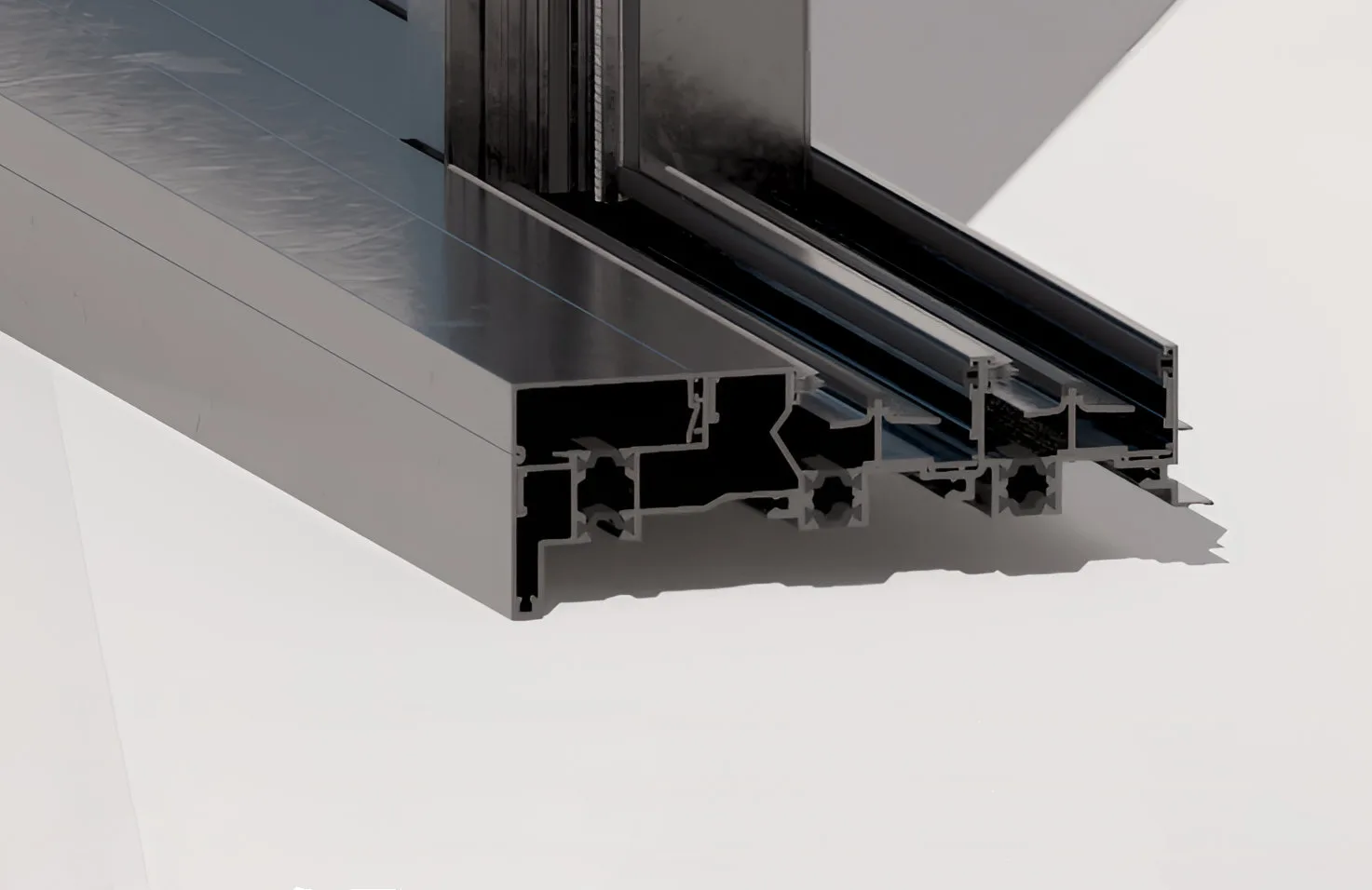
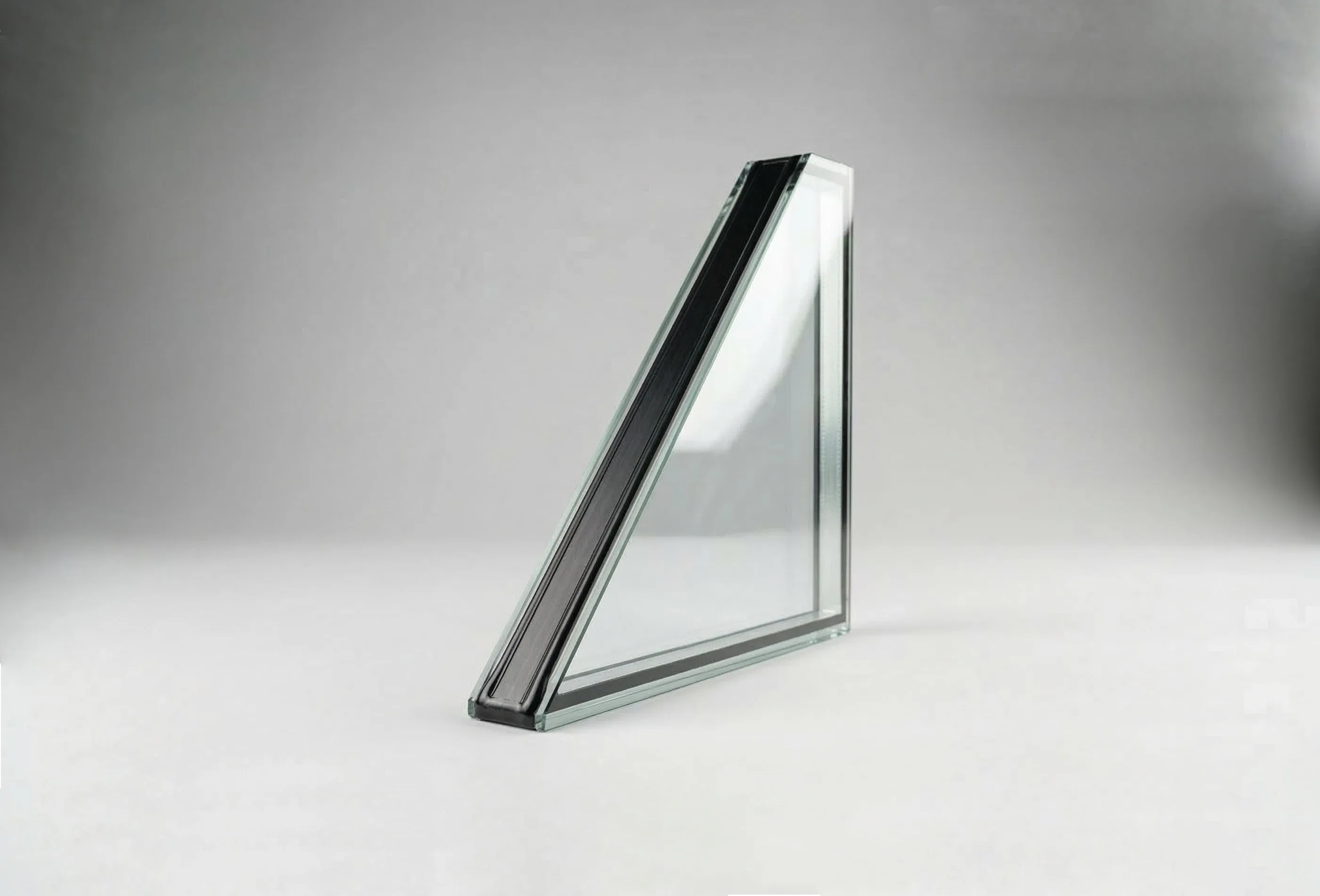
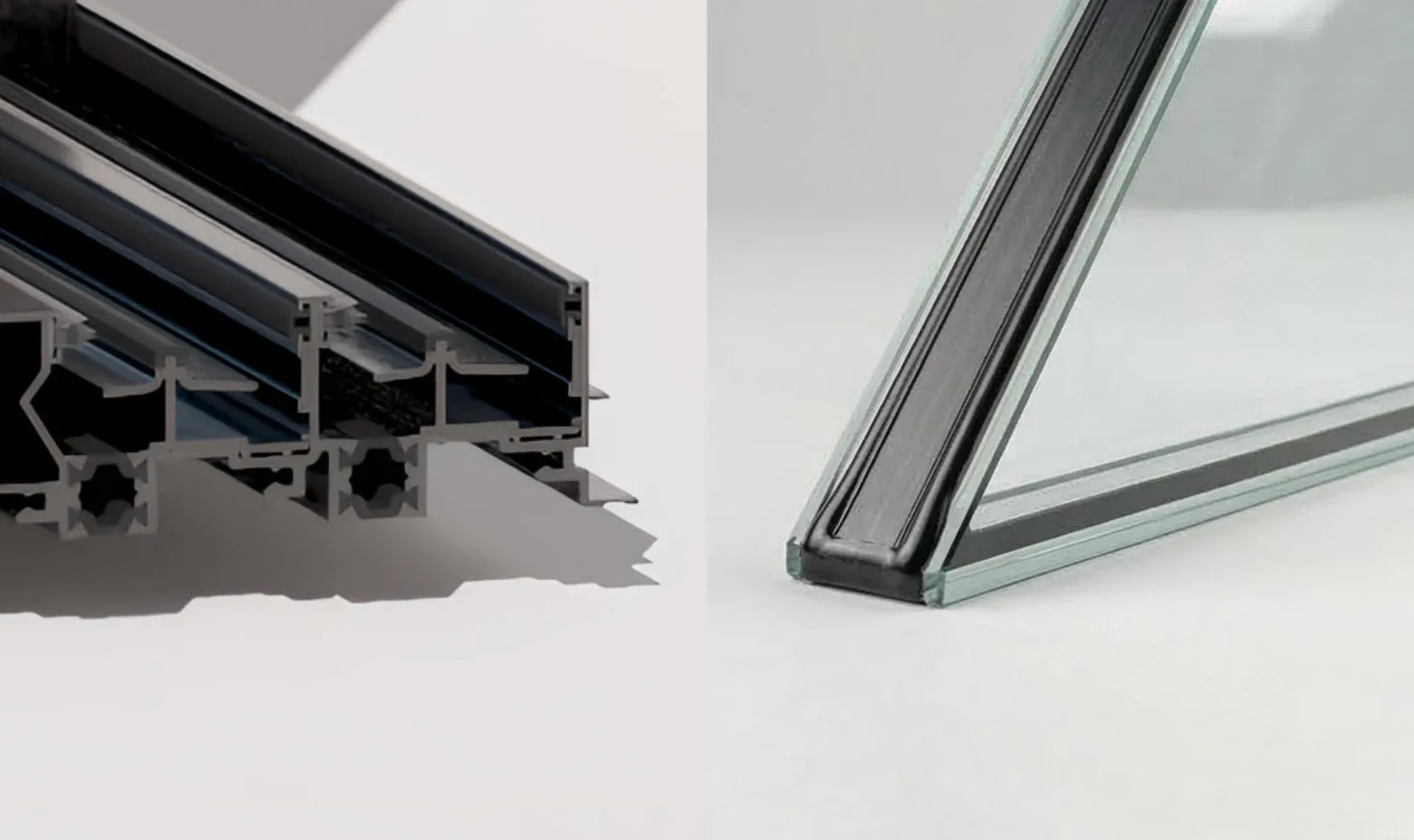
They sound alike and they're easy to mix up, but a thermal spacer and a thermal break are two different parts of the same window. The spacer sits between the two panes of glass, inside the sealed unit. The break sits inside the aluminium frame. Both slow heat from crossing the window, just at different points.
Get the names straight once and the rest follows: anything "spacer" is about the glass, and anything "break" is about the frame.
A window loses heat at two weak points: through the frame and around the edge of the glass. The break fixes the first, the spacer fixes the second.
Two technologies, two locations
- 1The thermal break sits inside the aluminium frame and stops heat conducting through the metal.
- 2The thermal spacer sits between the glass panes and keeps the glass edge warm.
- 3Together they close the two main cold bridges in a window: the frame and the glass edge.
Side by side
- Location. Spacer: between the glass panes, inside the sealed unit. Break: inside the aluminium frame profile.
- Job. Spacer: seals and separates the two panes while slowing heat at the glass edge. Break: separates the inner and outer frame profiles so heat can't conduct through the metal.
- Problem it solves. Spacer: cold glass edges and edge condensation. Break: cold frames and frame condensation.
- Made of. Spacer: composite, stainless-steel hybrid or structural foam. Break: glass-fibre-reinforced polyamide (PA66) between two aluminium profiles.
- What it's worth. Spacer: up to 10 to 12%* better glass-unit U-value over a standard aluminium spacer. Break: up to 50 to 60%* less heat loss through the frame.
- Can you see it. Neither. Both sit hidden behind the glass or the frame.
Why you want both
Each one closes a different cold bridge, so the gains stack rather than overlap. A thermally broken frame with a warm-edge spacer and Low-E double glazing keeps the whole window, frame and glass edge alike, close to room temperature. That's the combination behind a window that holds its warmth, sheds road noise and stays clear of condensation. Together these can cut heat loss through the window by up to 73%* against single glazing in a standard frame.
What we spec
For most Canterbury homes we fit thermally broken aluminium frames with Low-E double glazing and warm-edge spacers, so both weak points are handled from the start. Working to a budget? We'll point you to the upgrades that matter most for the rooms you actually live in. We'll talk it through, room by room, on a free site measure.
Indicative figures only. They are derived from typical industry U-values rather than testing of a specific Lume unit, and describe heat loss through the window or frame itself, not a total household energy saving. The thermal-break figure reflects BRANZ testing of thermally broken versus standard aluminium frames, as reported by Level (level.org.nz). Actual performance depends on window size, glass configuration, frame type, install quality and your home's conditions. Certified performance data for your specified joinery is available on request.