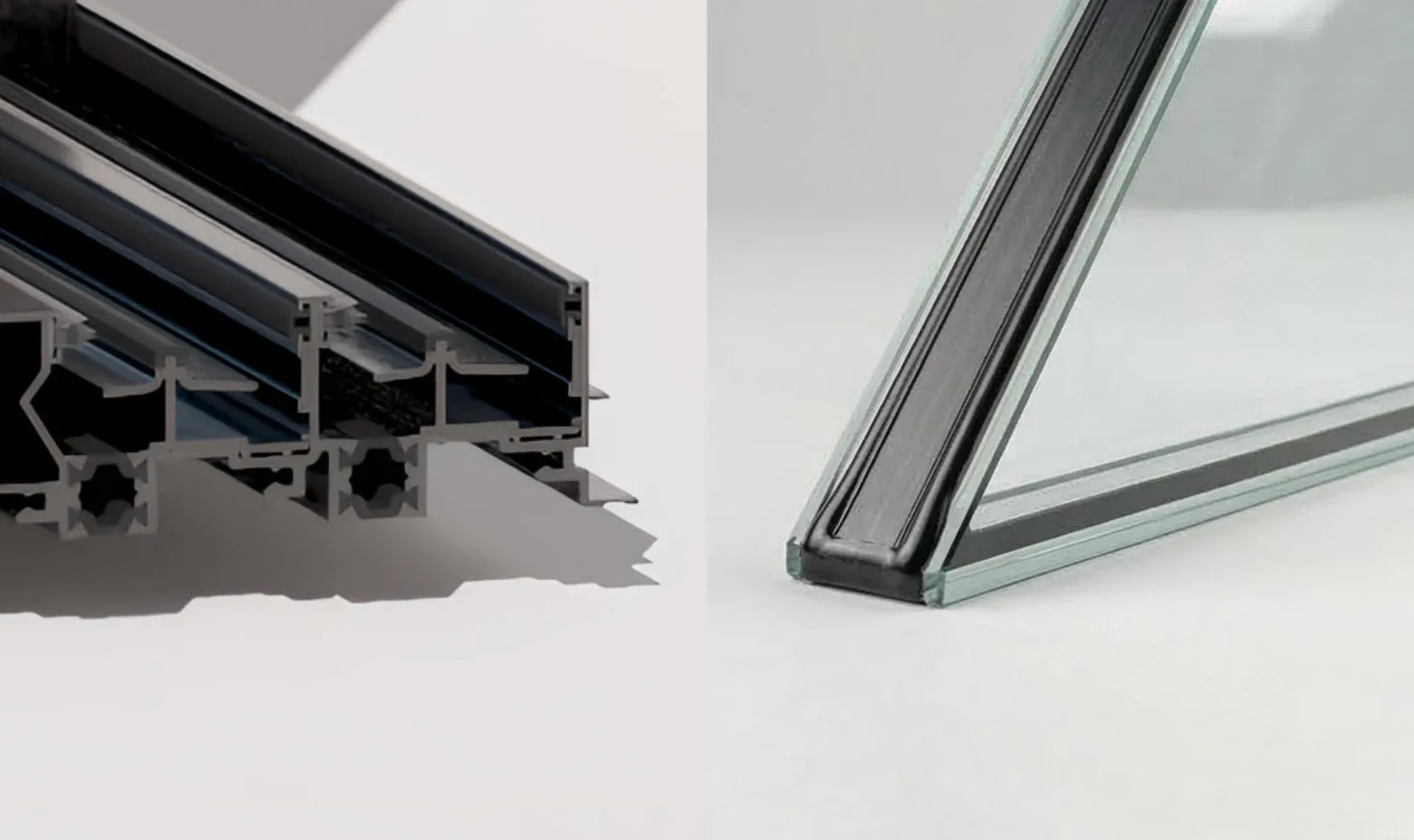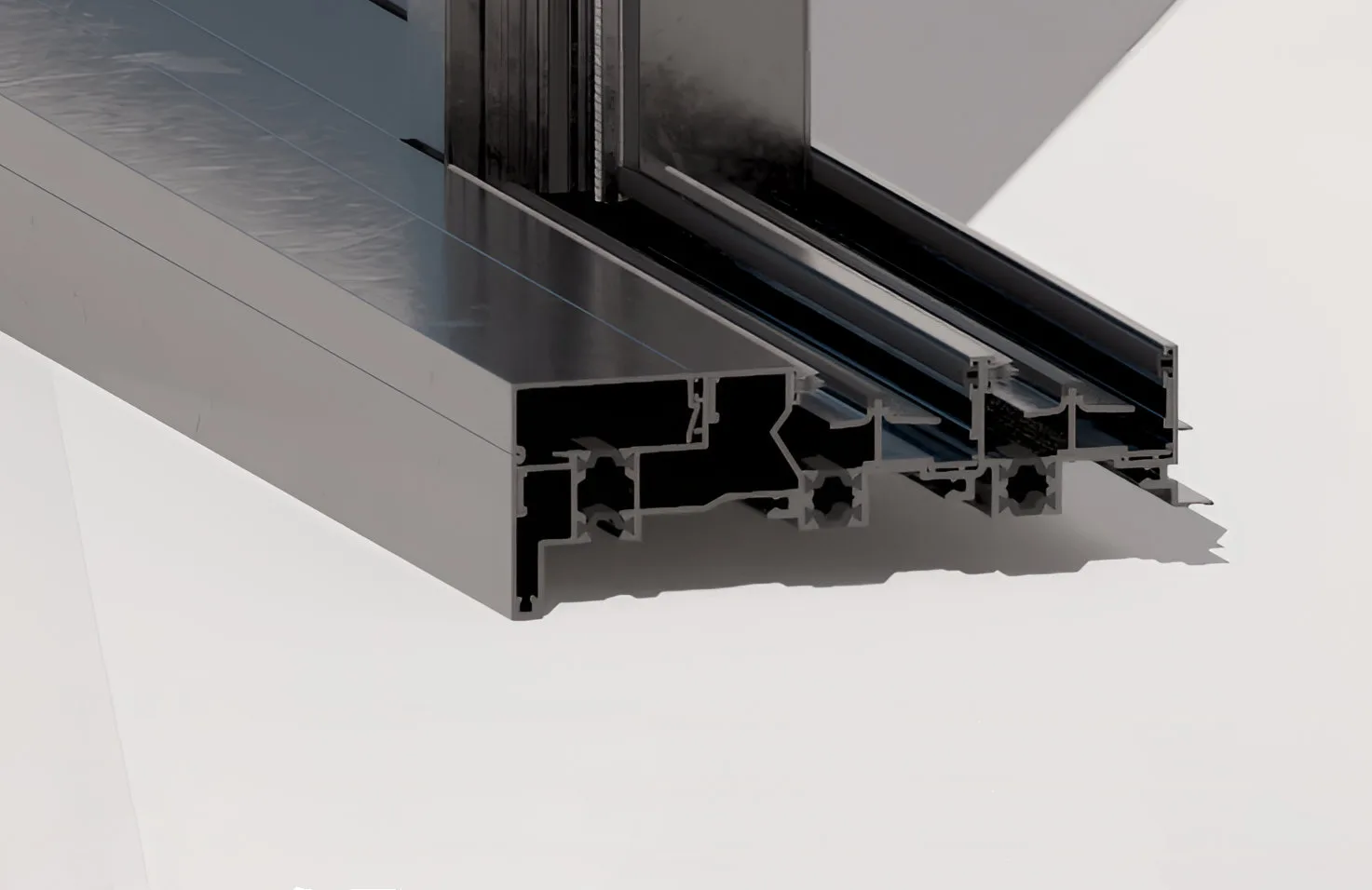
Aluminium is strong, slim and low-maintenance, but on its own it carries heat straight through the frame. A thermal break is the one part that fixes that. Here's what it is and what it changes.
How it works
A thermal break is a strip of polyamide, a strong low-conductivity plastic, locked between the two aluminium profiles that make up a window frame. Aluminium carries heat roughly a thousand times faster than that polyamide, so a standard one-piece frame works like a bridge: warmth travels straight from the warm inside face to the cold outside. The break cuts that bridge. Heat can no longer run through the metal, so the inside of the frame stays close to room temperature.
You can't see it from either side. The polyamide sits hidden inside the profile, and a thermally broken frame looks identical to a standard one.
The inside face of a non-broken aluminium frame gets almost as cold as the air outside. That's the cold strip you feel, and the line where condensation forms.
Inside a thermally broken frame
Inner aluminium stays warm, so the cold never reaches it.
Cold conducts in through the outer aluminium profile.
- 1Outside cold conducts into the outer aluminium, chilling the metal.
- 2The polyamide thermal break stops it dead at the barrier.
- 3The inner aluminium stays warm, so there's no cold bridge and less condensation.
What you gain
- Far less heat loss through the frame. A thermal break cuts frame heat loss by roughly 50 to 60%* compared with a standard aluminium frame.
- A warmer frame surface. The inside face stays up to 10°C* warmer, so it no longer feels cold to the touch on a winter morning.
- Less frame condensation. A warmer frame gives moisture far less cold surface to gather on, so you wipe down fewer sills.
- Lower heating bills. Paired with Low-E double glazing, a thermally broken frame can cut total heat loss through the window by up to 73%* against single glazing in a standard frame.
- A little more quiet. The polyamide strip also dampens sound passing through the frame, on top of what the glass does.
- Ready for H1. As New Zealand's energy rules (H1) tighten, thermally broken frames are becoming the standard for new builds and major renovations.
Myths, cleared up
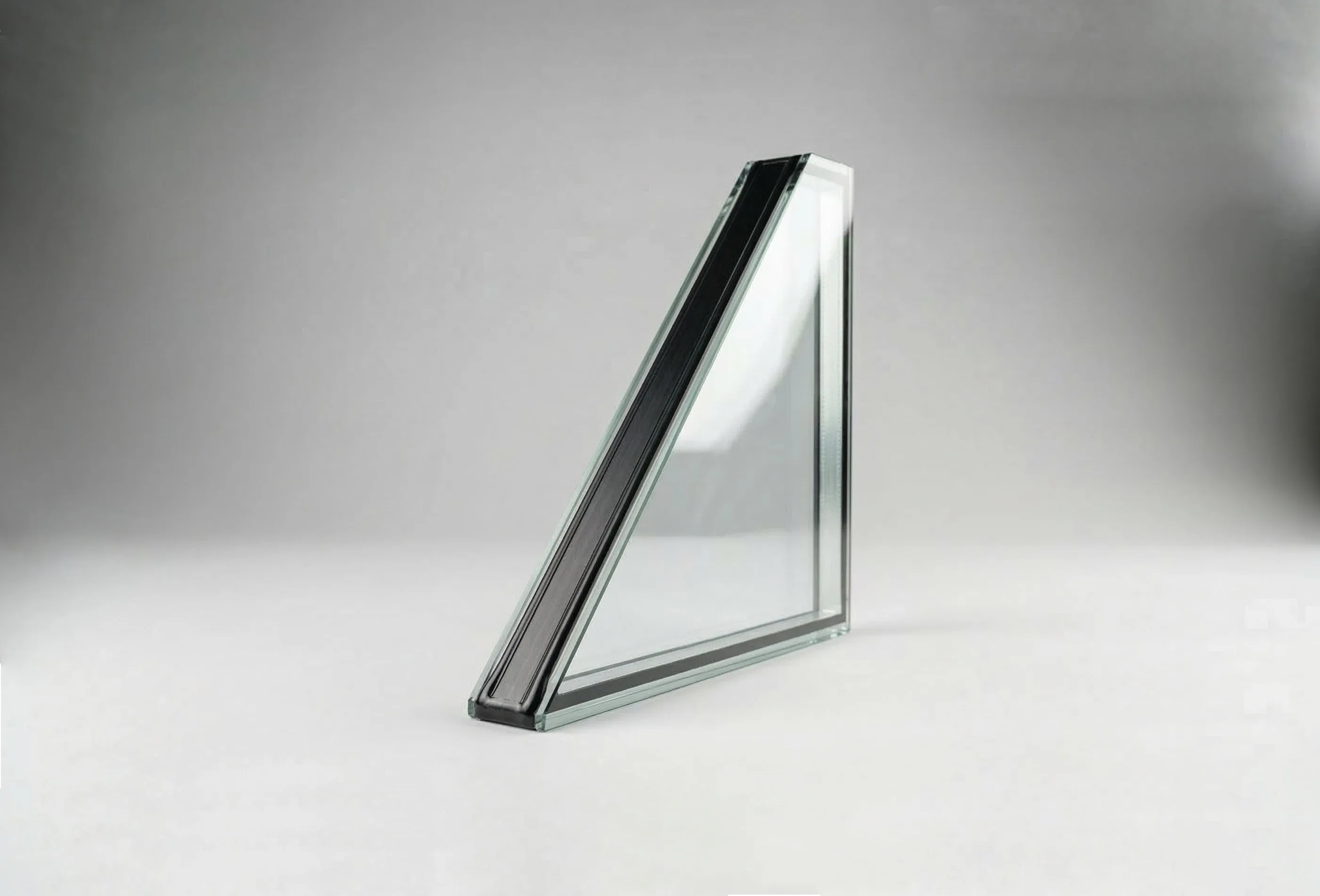
- "A thermal break is the same as a thermal spacer." They're different parts of the window. The break sits in the aluminium frame; the spacer sits between the glass panes. Both cut heat transfer, in different places. Our spacer-vs-break guide lays the two side by side.
- "A break makes the frame weaker." Modern polyamide breaks (PA66 reinforced with glass fibre) are mechanically locked to both aluminium profiles. The finished frame meets the same structural standards as a non-broken one.
- "You only need it in very cold places." Even a Christchurch winter has enough of a temperature gap to make a bare aluminium frame feel cold and pull condensation onto it.
- "You can spot one by looking." From the outside they're identical. The only clue is sometimes a slightly deeper frame.
When to spec it
If you're moving to double glazing, the frame becomes the next weak link, so a thermal break is worth it on the living and bedroom spaces where you spend your evenings. On a full replacement or a new build we'd usually spec it throughout. We'll walk through where it earns its keep, room by room, on a free site measure.
Indicative figures only. They are derived from typical industry U-values rather than testing of a specific Lume unit, and describe heat loss through the window or frame itself, not a total household energy saving. The thermal-break figure reflects BRANZ testing of thermally broken versus standard aluminium frames, as reported by Level (level.org.nz). Actual performance depends on window size, glass configuration, frame type, install quality and your home's conditions. Certified performance data for your specified joinery is available on request.